Essex County Council's Employee Travel Plan
We are leading by example by sharing our Travel Plan, showing how Essex County Council supports employees at County Hall and hub offices to choose active and sustainable travel, helping create safer, greener and healthier journeys across the county.
-
Event: Guided walk around Chelmsford
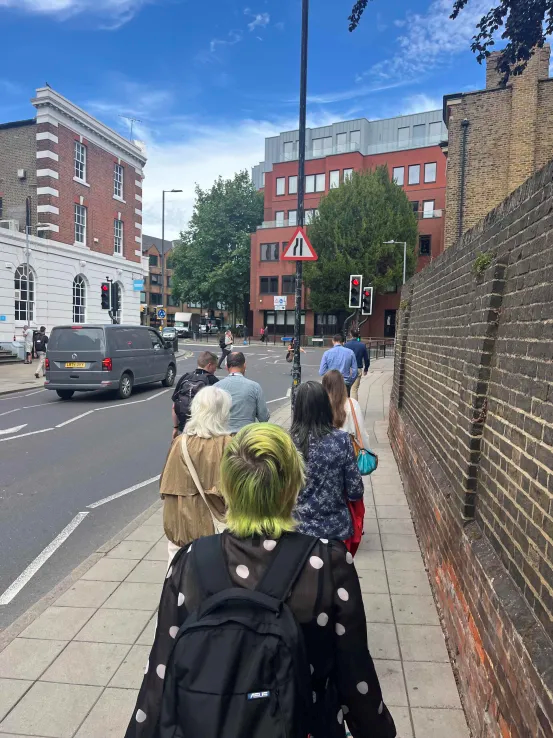
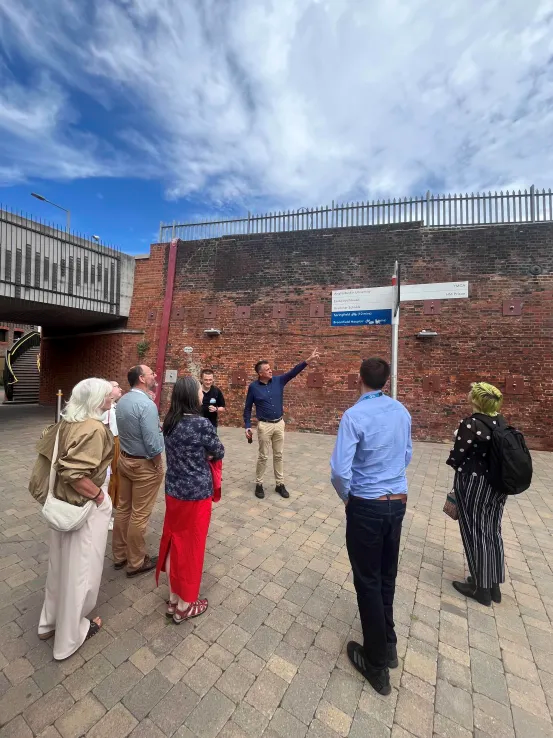
We hosted a guided walk around Chelmsford in the summer, for colleagues based at County Hall. The event encouraged staff to take an active break, and was led by a member of the Sustainable Travel Team, who talked them through the local infrastructure.
The walk was well received, with participants enjoying the opportunity to get outdoors, connect with colleagues, and learn more about the history and design of Chelmsford's public spaces.
We're delighted with the positive feedback and hope this will be the first of many events hosted through our travel Travel Champions network.
What participants said:
"[I enjoyed] Seeing bits of Chelmsford I don't usually walk through and learning about signs in the city."
"The information provided was useful, and it was great to see areas of Chelmsford that I wasn't aware of before."
"It was very interesting to hear about why certain design choices were made and what they aim to achieve. It also made me think about how I've used similar spaces before and how they could be improved."
A huge thank you to everyone who took part and helped make the event such a success.
Take a look at some of the photos from the day!
-
Travel Champion Stories: Walking for your wellbeing, Danielle Macdonald
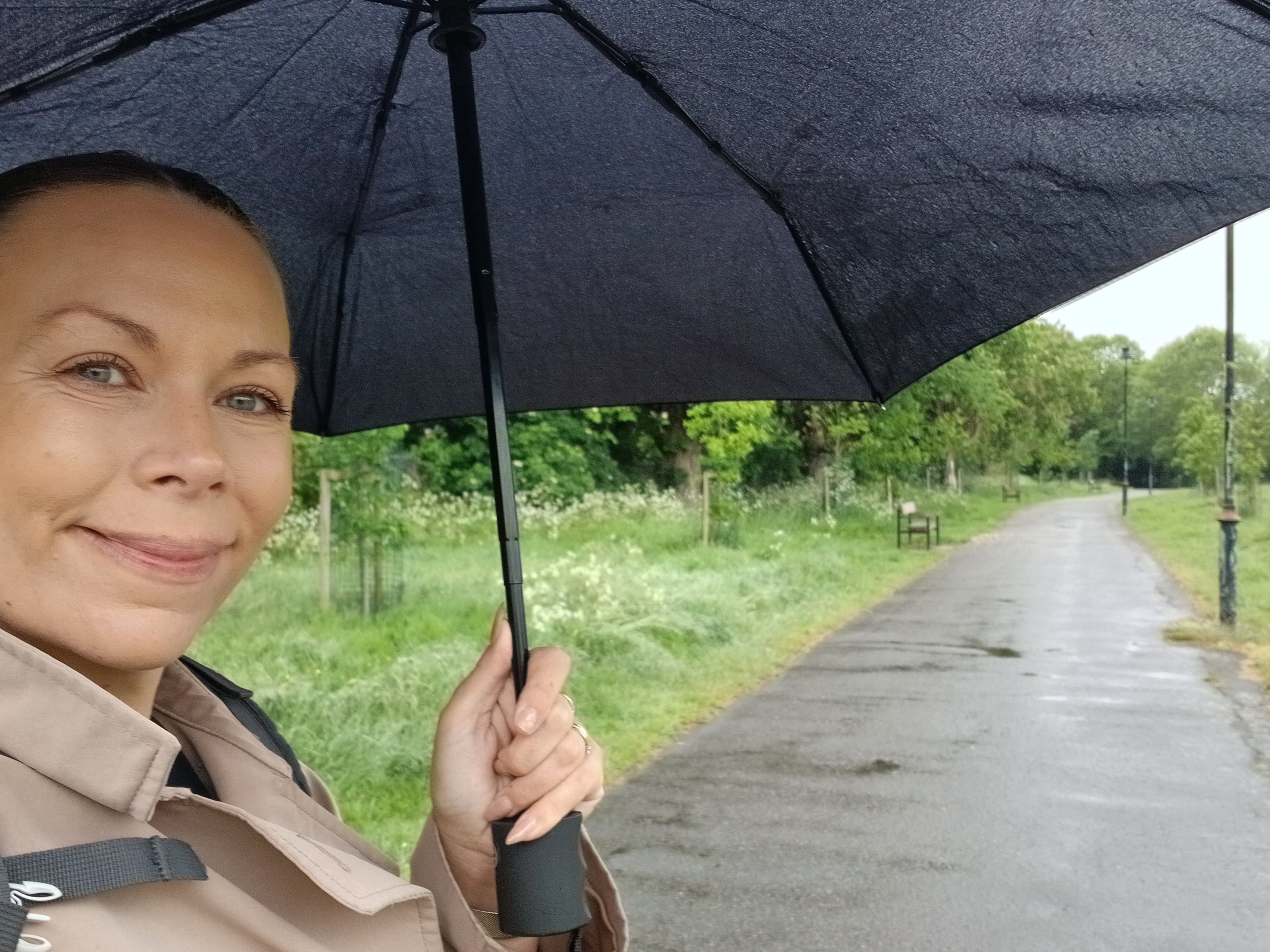
Danielle shares a snapshot about her active commute to work!
1. How do you usually get to work?
I usually walk, it takes me around 45 minutes to get from Springfield in Chelmsford to County Hall, there is a lovely walking route which crosses Springfield Green joined up with a cycling route.
2. What do you enjoy most about your journey
It is a chance to have a bit of “me” time, I find it particularly good for my mental health as it allows me to process my thoughts and emotions, get some fresh air and just enjoy a walk and get some exercise before I start and finish work.
3. What is something that helps makes your commute work well for you?
The walking route is easy, pretty and costs me and the environment nothing.
4. Has your way of travelling changed over time? If so what helped you make that change?
I am a non driver so the only change I have made has been walking instead of cycling, I found cycling in my work clothes difficult as my trousers would get caught in the gears so walking is more suitable for me, although the cycling route from springfield to Chelmsford City Centre is excellent.
-
Travel Champion Stories: Why cycling just makes life easier, Lydia Whitaker
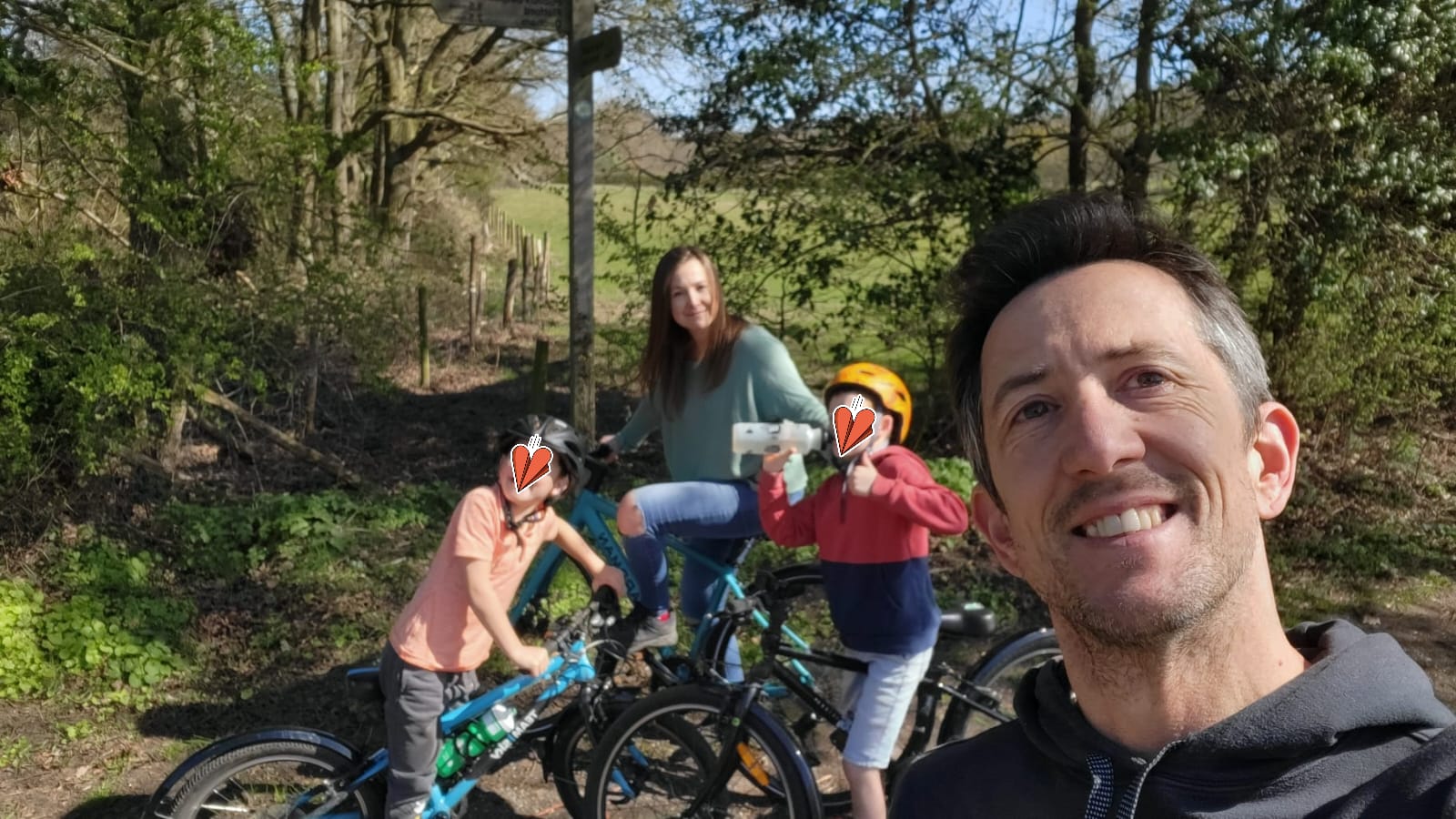
Cycling just makes life easier. I do not see myself as an exemplary cyclist, but it is quicker than walking, it improves my mobility, it reduces my back and leg pain due to endometriosis, and it helps me and my family avoid unnecessary short car trips. It is now part of our daily life, and over time it has become the obvious choice for our school run. When we first started, only two other families were cycling. A couple of years later, four more families have joined in. It is a small change, but a meaningful one.
For me, that five‑minute ride to school is short but impactful, and it fits neatly into my busy routine. I drop the kids off and then cycle to the station to finish my commute by train. Even though the ride is brief, it has made a noticeable difference to my physical and mental health, and I really feel it on the days I do not cycle.
My partner and I taught both of our children to cycle early. When my eldest started school, my youngest was already confidently riding a balance bike at the age of three. Even though driving might have been easier at times, I wanted cycling to be the default and for my children to see it not as an event, but as an ordinary way to get around.
By the time my youngest reached school age, both children were cycling independently without stabilisers. We make a point of celebrating every milestone, so they see cycling as a skill to be proud of. Now that they are nearing the end of primary school, we enjoy short leisure rides together. Sometimes we ride to Constable Café near Manningtree or along the Wivenhoe Art Trail. These simple trips have become small adventures, and they help me build more cycling into my days. As a family, we use our bikes for most local trips around Manningtree, including shopping, visiting friends, and riding along the estuary. Cycling gives me and family a sense of freedom that I really value.
I often remind myself that cycling does not have to be perfect or constant. We sometimes drive when the weather is extreme, and although I cycle most days, it is not every day. My partner helps with bike maintenance and has taught the children how to fix punctures, which has boosted their confidence and independence.
My message is simple. Cycling is not about perfection. It is about doing what you can, when you can, and making those small everyday journeys easier.
-
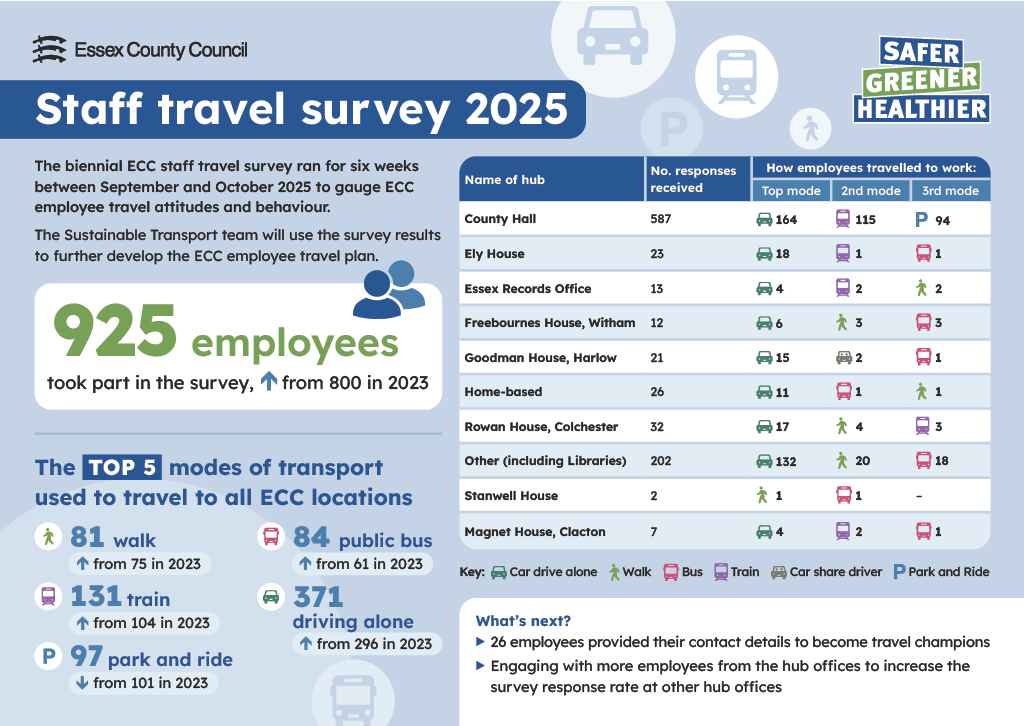
Essex County Council Survey Infographic
If you would like to read the full survey report, please see it linked on the right hand widget, under documents.

-
Sustainable Travel Planning Officer

-
Sustainable Travel Planning Officer